🔑 Schlüsseldienst Berlin | Türöffnung - Olex Schluesseldienst🔑 Schlüsseldienst Berlin | Türöffnung - Olex Schluesseldienst🔑 Schlüsseldienst Berlin | Türöffnung - Olex Schluesseldienst
Available 24/7
13435 Berlin, Deutschland
🔑 Schlüsseldienst Berlin | Türöffnung - Olex Schluesseldienst🔑 Schlüsseldienst Berlin | Türöffnung - Olex Schluesseldienst🔑 Schlüsseldienst Berlin | Türöffnung - Olex Schluesseldienst

Electronic Locking Systems Berlin

Electronic locking systems are no longer a solution reserved for large companies or particularly sensitive security areas. In Berlin, apartment buildings, smaller businesses, medical practices, law firms and modern residential properties are also increasingly choosing digital access solutions. The reason is simple: they combine security, flexibility and convenience in a way that is often difficult to achieve with conventional key systems.

Anyone who has ever stood in front of a door that has slammed shut, lost a key or had to deal with a defective lock knows how quickly a minor issue can become a real problem. This is exactly where electronic locking systems show their strength. Instead of relying on rigid, purely mechanical processes, access can be controlled more precisely, managed more easily and adjusted at short notice when necessary. This is particularly useful where several people need different access rights or where users, rooms and responsibilities change regularly.

Especially in a city like Berlin, with mixed-use buildings, changing tenancies, offices, medical practices and residential complexes, a modern access system is often not only convenient but also economically sensible. A professional solution ensures that access to building entrances, interior areas, offices, technical rooms or communal spaces remains clearly regulated. At the same time, it reduces the risks associated with lost keys, unclear access rights or locking structures that have developed piecemeal over time.

Anyone who chooses electronic locking systems is therefore not simply choosing a new door lock. It is about a well-planned solution for everyday use: transparent, expandable and tailored to how the property is actually used. That is what makes the difference between technology for its own sake and a system that genuinely makes everyday life easier.

What electronic locking systems actually are

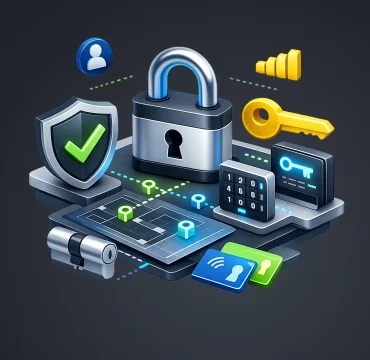
Electronic locking systems are modern access solutions in which doors are no longer opened exclusively with conventional keys. Depending on the system, transponders, cards, codes, apps or other digital credentials are used instead. Access is therefore controlled not only mechanically but electronically. This provides considerably more options for administration, security and adjustment.

At its core, the aim is to organize doors and access points so that it can be defined precisely who may enter where and when. While a lost key can quickly become a security problem with a conventional locking system, digital access rights can often be managed much more selectively. This is why many customers specifically look for an electronic locking system in Berlin when modernizing a property or setting it up to remain flexible from the outset.

Another advantage is clarity. Electronic systems can often be structured more effectively than key systems that have grown over time. This becomes particularly noticeable when several user groups are involved. Residents, employees, service providers or property managers receive exactly the rights they need—no more and no less. This creates clear, traceable access instead of a confusing key ring with ever more exceptions.

Electronic locking systems are not limited to new buildings. In many cases they can also be used effectively in existing properties. What matters is not the age of the building, but whether the access solution fits everyday use. This is where a professional assessment is worthwhile.

Which buildings and users benefit from electronic locking systems

Not every property immediately needs the same technical solution. But wherever several doors, several people or different access rights come together, electronic locking systems quickly become relevant. They are particularly useful when permissions need to be adjusted flexibly and conventional keys reach their practical limits.

Residential and apartment buildings

In residential complexes, clear access arrangements are particularly important. Building entrances, basements, bicycle rooms, technical areas and shared spaces should be secure while remaining easy to access for authorized users. A digital system can provide greater clarity here. Residents receive only the permissions they actually need, and if an access medium is lost, the entire system does not immediately have to be called into question. This is exactly why many owners and property managers are interested in a locking system for apartment buildings with an electronic structure.

Offices, medical practices and commercial units

In commercial properties, requirements are often even more differentiated. Reception areas, staff rooms, archives, storage rooms, technical rooms or individual office areas usually need different access rights. In addition, teams, responsibilities and working hours can change. Electronic systems are particularly strong here because they remain flexible. Anyone looking, for example, for a locking system for an office in Berlin or modern access control in Berlin is usually looking for exactly this combination of security and practical administration.

Mixed-use properties and modern buildings

Many Berlin buildings are neither purely residential nor purely commercial. Commercial units on the ground floor, apartments above, plus ancillary rooms, delivery entrances or shared areas—such structures are ideal for electronic locking systems. They help keep different areas of use clearly separated while still managing everything within one coherent concept. This makes everyday use easier and reduces typical points of friction.

Typical situations in which electronic locking systems are particularly useful

The desire for a modern solution often arises not from enthusiasm for technology itself, but from a concrete everyday situation. Many customers only start considering electronic locking systems after a conventional problem occurs and makes it clear that the existing solution no longer fits their needs.

A common example is a door that has slammed shut. The key is inside, access is blocked, and suddenly the limitations of a purely mechanical system become obvious. Lost keys are another classic trigger. In apartment buildings, offices or commercial properties in particular, the immediate question is which areas that key could access. With a digital solution, this uncertainty can often be managed much more effectively.

Another typical reason is a defective or stiff lock. If cylinders catch, doors do not close properly or individual locking points repeatedly cause problems, many people initially think of repair. However, this can also be the right moment to consider a modern system. If an investment is necessary anyway, it is often worth looking at a solution that offers greater convenience and flexibility over the long term.

Even situations involving vehicles play an indirect role. If a car will not open, a transponder fails or an access system suddenly stops responding, it becomes clear how accustomed people have become to convenient, fast and secure access. This expectation of reliable, up-to-date access is also reflected in buildings—whether at home, in the office or in a commercial property.

When a lost key becomes a security problem

With conventional systems, a lost key can quickly have far-reaching consequences. No one wants to be uncertain about which doors are affected. Electronic systems offer a major advantage here because access rights can be managed and adjusted more selectively. People looking for keyless access control often do so for exactly this reason.

When users and access rights change frequently

In many properties, use does not remain constant. New employees join, tenants change, rooms are repurposed or external service providers need temporary access. This is exactly where conventional key concepts often reach their limits. Electronic locking systems can be adapted much more easily to changing processes and therefore remain practical in everyday use.

How the process works from the first consultation to the finished solution

A good electronic locking system begins not with technology, but with a thorough analysis. Not every property needs the same solution, and not every modern feature is automatically useful. The decisive question is always how the building is used and which access points actually need to be controlled.

The first step is therefore an assessment of the existing situation. Which doors are there? Who uses them? Which areas are sensitive? Which access points should remain permanently open, which should be time-limited, and which should be available only to specific people? Only once these questions are clarified can it be determined whether a compact system for a few doors or a more extensive digital locking system with several permission levels makes sense.

The next step is selecting the appropriate components. Depending on the property, transponders, card readers, keypads or app-based solutions may be suitable. Sometimes a combination is the best option. What matters is that the system not only works today but can also be expanded in the future. This is one reason customers specifically search for an electronic door lock or a transponder door system: they want a solution that can grow with the property.

During implementation, clean and professional work is what matters most. Doors, fittings and existing conditions are taken into account so that the installation functions reliably and requires as little unnecessary intervention as possible. The goal is always a solution that is technically sound, visually neat and easy to understand in everyday use.

Planning based on actual use instead of a one-size-fits-all approach

An electronic locking system should not simply look modern; it should make everyday life easier. Planning is therefore always based on the actual processes within the property. Who needs access first in the morning? Which areas need to be secured? Where is convenience particularly important? These questions form the basis of a system that is practical rather than unnecessarily complicated.

Installation, setup and clear guidance for everyday use

After installation, it is not enough simply to check whether the door opens. Customers also need to understand how the system is used. What access rights are available? How are permissions managed? What happens if an access medium is lost? Olex Schlüsseldienst therefore pays attention not only to the technical implementation, but also to ensuring that the solution remains understandable in everyday use for owners, property managers and users.

The benefits for customers in everyday use

The greatest advantage of electronic locking systems is often not the technology itself, but the relief they bring to everyday routines. As soon as a building has several users, several doors or changing access rights, conventional keys quickly become impractical. Digital solutions provide greater clarity, control and flexibility.

A key point is flexibility. Access rights can be assigned, adjusted or withdrawn selectively without having to reorganize physical keys each time. This is a noticeable benefit particularly in offices, medical practices, residential complexes and mixed-use buildings. Anyone searching for a smart lock for commercial use is usually thinking of exactly this practical side: less effort, clearer responsibilities and better control.

Security is another important factor. Electronic locking systems make access easier to plan and manage. It is easier to understand which people have access to which areas. At the same time, the risk created by uncontrolled copied or lost keys is reduced. This is a real advantage, especially in properties involving many people.

Convenience should not be underestimated either. Fewer keys, quicker access and modern operation may sound like small improvements, but in everyday use they make a noticeable difference. Only after using a well-functioning system does it become clear how convenient clearly regulated access can be. This is exactly what makes electronic locking systems so attractive for many properties today.

And last but not least, they are often more future-proof. Anyone modernizing today does not want to start over again after a short time. A well-planned system can often be expanded, adapted and used effectively over the long term—an especially valuable quality in Berlin with its constantly changing property structures.

What customers should know about costs

With electronic locking systems, many customers understandably want a quick price estimate. At the same time, it would not be serious to quote blanket figures without knowing the property, scope and requirements. Costs always depend on the solution that is actually needed.

The size of the property is an important factor. The more doors, user groups and access rights need to be integrated, the more extensive the system becomes. The type of technology required also matters. A compact system for a few access points is calculated differently from a comprehensive solution with multiple access points, time profiles or advanced administration functions.

The existing setup is also relevant. In some buildings, existing components can be partly integrated; in others, a complete reorganization makes more sense. Requirements also vary considerably: an apartment building, medical practice, office or commercial property does not have the same needs. This is why a reliable calculation is always based on a clear assessment rather than blanket promises.

For customers, the key point is that pricing remains transparent. Good providers explain what creates the workload, which services are included and which solution appears sensible in terms of benefit, security and future suitability. This turns a simple question of cost into a well-founded decision.

Service area in Berlin and the surrounding region

Electronic locking systems are particularly useful when consultation, implementation and later support are readily available locally. In Berlin, this can be a real advantage. Different building structures, older buildings, new developments, mixed residential and commercial use or larger residential complexes often require a property-specific solution rather than a standard package.

Berlin itself, with its wide variety of applications, is at the center of the service area. Enquiries are particularly common in Berlin-Mitte, Charlottenburg-Wilmersdorf, Pankow and Reinickendorf, where residential, work and mixed use are closely combined. Projects in Spandau, Tegel and Friedrichshain-Kreuzberg are also relevant when access needs to be modernized, reorganized or made more flexible.

In addition, a regional service can also be useful for properties in the areas surrounding Berlin. The main advantage is practical proximity: short travel distances, clear coordination and a quick on-site assessment. This makes cooperation noticeably easier for owners, property managers and commercial customers.

24-hour emergency service and modern solutions when it matters

Although electronic locking systems are primarily designed for planned, structured access solutions, rapid assistance also plays an important role in the background. Problems with doors and access do not arise only during the day or by appointment. A door slams shut, an access point stops responding, an access medium is lost or an existing lock suddenly fails. In such situations, reliability matters most.

That is why modern system solutions and urgent assistance should be considered together. A 24-hour emergency service gives customers the reassurance that they will not be left without help in urgent situations. This applies to residential buildings just as much as to offices, medical practices or commercial properties. Anyone choosing electronic locking systems today wants not only convenience, but also a contact person when fast assistance is needed.

The combination of professional planning, careful installation and accessible support in an emergency is what makes a good solution complete. If you are looking for a modern, flexible and secure access solution for your property in Berlin, an individual consultation is worthwhile. 

Contact us if you want electronic locking systems implemented professionally and value clear advice, careful work and a 24-hour emergency service

Electronic locking systems are modern access solutions in which doors are opened not only with a conventional key, but for example with a transponder, code, card or smartphone. They help organize access more flexibly and clearly.


They are suitable for many different properties, for example apartment buildings, offices, medical practices, commercial units or modern residential buildings. They are particularly useful wherever several people need different access rights.


A major advantage of electronic locking systems is that lost access rights can often be blocked or replaced selectively. This means the entire system does not automatically have to be replaced, as can become necessary or problematic when mechanical keys are lost.


Yes. When properly selected and installed, electronic locking systems provide a high level of security. They allow access rights to be assigned clearly and are often easier to manage than conventional locking solutions.


Yes, in many cases this is possible without any problems. If new doors, users or areas are added, the system can often be adapted or expanded. This is precisely why electronic solutions are particularly attractive for growing or changing properties.


Related services

Simply send us an inquiry with photos. We will check your key and get back to you with a clear assessment

Solutions

Contact us!

Company profile on Google

At vero eos et accusamus et iusto odio digni goikussimos ducimus qui to bonfo blanditiis praese. Ntium voluum deleniti atque.

Melbourne, Australia
(Sat - Thursday)
(10am - 05 pm)